Cooling Fan IP Ratings Explained: IP54, IP68 and IP69K — and When You Actually Need One
What a cooling fan's IP rating really means — dust and water protection from IP54 to IP69K — when waterproofing is worth paying for, and what it does not cover.
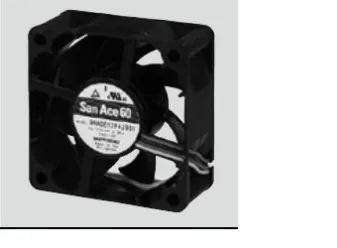
When a cooling fan has to work outdoors, in a washdown area or in dusty, humid air, the first question is not airflow — it is whether the fan itself will survive the environment. That is what the IP rating answers. But the two digits after "IP" are widely misunderstood, and buying a higher rating than the job needs wastes money, while buying too low a rating kills the fan early.
This guide explains what each rating means, what it does not cover, and how to pick the right one.
What the two digits mean
IP stands for Ingress Protection, defined by the IEC 60529 standard. The first digit rates protection against solid objects and dust, from 0 (no protection) to 6 (dust-tight). The second digit rates protection against water, from 0 to 9K. A fan rated IP68 is dust-tight (6) and protected against continuous immersion (8). A fan rated IP54 is protected against dust ingress in amounts that do not interfere with operation (5) and against splashing water from any direction (4).
The digits are independent: a high water rating does not imply a high dust rating, and vice versa. Always read both.
Common ratings and what they are for
| Rating | Dust | Water | Typical use |
|---|---|---|---|
| IP54 | Dust-protected | Splashing water | Indoor equipment in dusty workshops, light outdoor shelter |
| IP55 | Dust-protected | Low-pressure water jets | Outdoor cabinets, telecom shelters |
| IP65 | Dust-tight | Low-pressure water jets | Outdoor equipment, dusty industrial sites |
| IP67 | Dust-tight | Temporary immersion up to 1 m for 30 minutes | Equipment that may be flooded or hosed down briefly |
| IP68 | Dust-tight | Continuous immersion beyond 1 m, under conditions the manufacturer specifies | Submerged or permanently wet environments |
| IP69K | Dust-tight | High-pressure, high-temperature water jets | Washdown areas, food processing, vehicles, medical cleaning |
The right rating follows the environment, not the catalogue's top line. A dry indoor server cabinet does not need IP68; an outdoor advertising screen probably needs at least IP55.
What an IP rating does not mean
Three misunderstandings cause most bad purchases.
First, IP68 does not mean "waterproof forever, at any depth." The "8" test is continuous immersion beyond 1 metre, but the exact depth and duration are defined by the manufacturer and stated in the datasheet. Two IP68 fans can be tested to very different conditions, so check the datasheet, not just the headline rating.
Second, IP68 and IP69K are different tests, and one does not include the other. IP68 is about submersion; IP69K is about surviving high-pressure, high-temperature water jets during cleaning. A fan can pass one without passing the other. Fans that carry both — such as the NMB 09238RE-24P-GTD-0, rated IP68/IP69K — have been tested for both, which is what washdown applications actually need.
Third, an IP rating says nothing about chemicals, steam, or the rest of the system. It does not mean the fan resists oil, solvents or corrosive gas, and it does not make the enclosure waterproof — the rating applies to the fan itself, including its cable entry and seals. If the cabinet leaks, the fan's rating will not save the equipment inside.
When you need a rated fan — and when you do not
You need an IP-rated fan when the fan itself is exposed: outdoor installations, equipment that gets hosed down, condensing humidity, heavy dust, or washdown cleaning. In those cases the rating is not optional — an unprotected fan will draw dust into the bearing, corrode, and fail long before its rated life.
You do not need a high rating for a fan mounted inside a sealed, dry, air-conditioned cabinet. Paying for IP68 there buys nothing, and a rated fan is not automatically a better fan: it still has to match the original on size, voltage, airflow and static pressure. A waterproof fan that moves too little air is still the wrong fan. Our replacement checklist lists all ten points to check, and airflow vs static pressure explains why the two must be compared together.
How to order the right rating
Start from the environment, not the rating: where is the fan mounted, what hits it (dust, splashes, jets, immersion, cleaning chemicals), and how often? Then read the original fan's datasheet for its rating and match or exceed it — do not guess from the label alone, and do not assume a replacement with the same frame size has the same rating. If the original rating is unknown, send us the model number or a photo of the label and we will check it against the datasheet.
That is how we match replacement fans at Xuanrui. Browse our NMB, AVC and SANYO fan ranges — including IP68/IP69K waterproof models in the NMB range — or contact us with the original model number and the environment it works in, and we will check the replacement against the original fan's datasheet.