Cooling Fan Sizes Explained: 20 mm to 120 mm and How to Pick the Right One
Cooling fan size is more than a frame dimension. How 20 mm micro fans, 40–92 mm mid-size fans and 120 mm fans differ in airflow, noise and fit — and what to check before ordering.
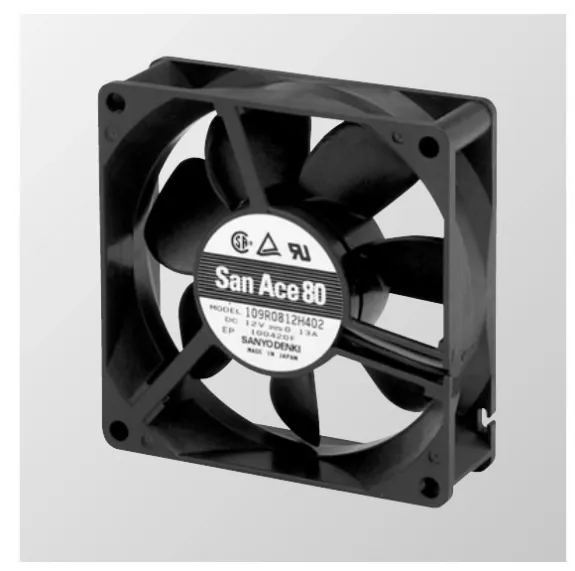
When a buyer searches for a cooling fan, the search usually starts with a size: 40 mm, 80 mm, 92 mm, 120 mm. Size is the first filter because it decides whether the fan physically fits — but it is only the first filter. Two fans with the same frame size can move very different amounts of air, at very different noise levels.
This guide explains what fan size really means, what each common size band is used for, and what else to check once the size fits.
What "size" means on a cooling fan
A fan's size is its square frame dimension — for example, 92 x 92 mm — plus its thickness, such as 25 mm or 38 mm. Both numbers matter. A 92 x 92 x 25 mm fan and a 92 x 92 x 38 mm fan fit the same mounting holes, but the thicker fan has deeper blades and usually moves more air against resistance. Mounting hole positions and the ribbed or ribless frame style also have to match the original fan, or the replacement will not mount cleanly even if the headline size is right.
Size bands and where they are used
| Size band | Typical equipment | What to expect |
|---|---|---|
| 16–40 mm micro fans | Compact electronics, small power supplies, handheld and embedded devices | Very little space to work with; airflow is limited, so the fan often runs at high speed |
| 60–80 mm | Industrial controllers, small inverters, telecom modules, 1U–2U equipment | A common replacement size; a good balance of airflow and fit in dense enclosures |
| 92 mm | Servers, storage, power supplies, medical equipment | One of the most searched replacement sizes; widely available in 12 V and 24 V |
| 120 mm and above | Servers, energy storage cabinets, inverters, large power supplies | The most airflow per unit of noise; thickness (25 mm vs 38 mm) makes a real difference here |
| Fan guards 40–200 mm | Any of the above, where fingers, cables or debris must be kept out of the blades | Sized to match the fan frame; a guard must cover the full frame, not just the blade area |
These bands are a starting point, not a rule. The right size is the one that fits the enclosure, meets the cooling requirement and stays within the equipment's noise limit — all three at once.
Bigger is not always better
A larger fan can move the same air at a lower speed, which usually means less noise. That is why equipment designers often choose the largest fan the enclosure allows. But a larger fan only helps if there is room for it: a 120 mm fan cannot replace an 80 mm fan if the mounting holes and the enclosure opening do not match. Forcing a size change usually means redesigning the enclosure, the grille and the airflow path — a much bigger job than swapping a fan.
Thickness is the dimension buyers forget
Two fans can share a frame size and still differ by 13 mm in thickness. That extra depth matters twice: it changes whether the fan fits in the available space, and it changes performance, because a thicker fan can build more static pressure against filters, heatsinks and dense cabling. When replacing a fan, check thickness alongside frame size — our replacement checklist lists all ten points, including voltage, current, airflow, static pressure, noise, life and signal functions.
Same size, different performance
Frame size fixes the fit, not the performance. Within one size, fans differ in speed, blade design, bearing type and motor — so one 92 mm fan can deliver far more airflow than another 92 mm fan, or run far quieter at the same airflow. That is why airflow and static pressure must be compared together, not as separate headline numbers; see airflow vs static pressure for how the two relate. Always compare the full specification, not the size alone.
How to order the right size
Start from the original fan: measure the frame and thickness, note the mounting holes, and read the label for voltage and model number. Then check the replacement against the original on airflow, static pressure, noise and life — not just dimensions.
That is how we match replacement fans at Xuanrui. Send us the original model number — or a photo of the fan label — and we will check the candidate against the original fan's datasheet across our NMB, AVC and SANYO fan ranges, from 16 mm micro fans to 120 mm fans, plus metal fan guards from 40 to 200 mm. Browse the models in our product list, or contact us for a size and replacement check.