Cooling Fan Airflow vs Static Pressure: Which One Does Your Equipment Need?
Airflow shows how much air a cooling fan can move; static pressure shows whether it can keep that air moving against resistance. How to read both, and why the operating point decides real cooling.
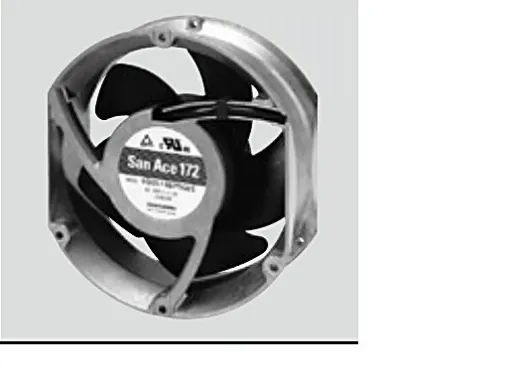
Ask for a cooling fan recommendation and the first number most people look at is airflow — how many CFM the fan delivers. But in DC fan selection, airflow is only one of two basic indicators. The other is static pressure, and together they decide whether a fan can actually complete the cooling task once it is installed in real equipment.
Put simply: airflow reflects how much air the fan can move, while static pressure reflects the fan's ability to overcome the equipment's air resistance and keep that air moving.
The three terms that matter
| Parameter | What it means | When it matters most |
|---|---|---|
| Airflow | The volume of air the fan moves per unit of time | Equipment with a high heat load that needs fast air exchange |
| Static pressure | The fan's ability to overcome air resistance | Narrow ducts, heatsinks, dust filters and other restrictive structures |
| Operating point | The actual working state where fan performance meets system resistance | Real equipment cooling design |
Match the curve to the system impedance
Every enclosure resists airflow. Heatsink fins, filter media, grilles, cable bundles and tight internal layouts all add resistance — the system impedance. A fan's performance is described by its airflow–static pressure (P-Q) curve, and the fan settles where that curve crosses the equipment's resistance curve. That crossing is the operating point, and the airflow at the operating point is the airflow your equipment actually gets.
This matching matters most in equipment with compact, crowded interiors: energy storage cabinets, servers, telecom equipment and industrial power supplies. In such systems the impedance is high, so a fan with an impressive free-air airflow rating may still deliver too little effective airflow once installed — the air simply cannot be pushed through.
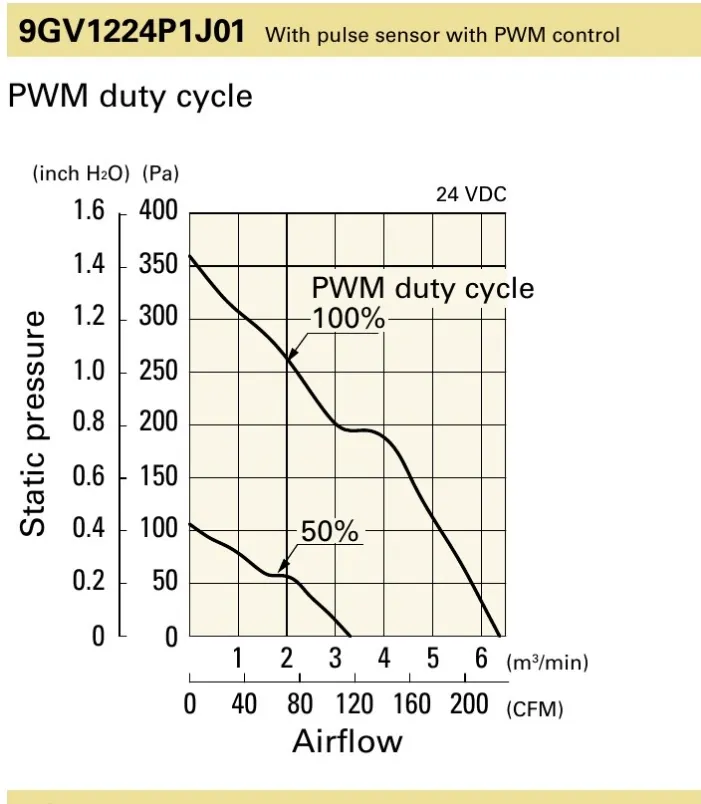
Transport capacity vs pushing power
A useful way to remember the difference:
High airflow provides air transport capacity. High static pressure provides the ability to keep air moving when it meets resistance.
Neither number is "better" on its own. An open, low-resistance enclosure with a high heat load mainly needs airflow. A dense, high-resistance enclosure mainly needs pressure. Most real equipment needs a considered balance of both, chosen from the fan's performance curve against the actual structure of the device — which is why we look at the whole system when matching a fan to equipment, and why a replacement fan needs more than a size match, as our replacement checklist shows.
If you are not sure which balance your equipment needs, send us the existing fan's model number or label photo. We will compare candidate fans' curves and operating points across our NMB, AVC and SANYO ranges — or contact us with your application details.