Replacing a Cooling Fan? Why Size Alone Is Not Enough
Replacing a cooling fan by size alone risks overheating and failure. Check voltage, current, airflow, static pressure, noise, life and signal functions first - a 10-point replacement checklist.
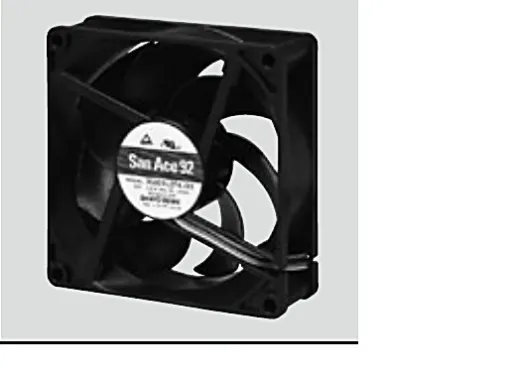
When engineers replace a cooling fan — during new equipment development, or when substituting an imported model with a readily available alternative — the first check is almost always the size. If the frame dimensions and mounting holes line up, the fan looks like a drop-in replacement.
But a matching size does not mean matching performance. Two fans with identical dimensions can differ widely in airflow, static pressure, power consumption, noise, rotational speed, bearing structure, expected life and control functions. A fan that fits the hole but not the application can leave equipment overheating, noisier than specified, or failing long before its design life.
Before confirming a replacement fan, check the following ten points.
1. Mounting size
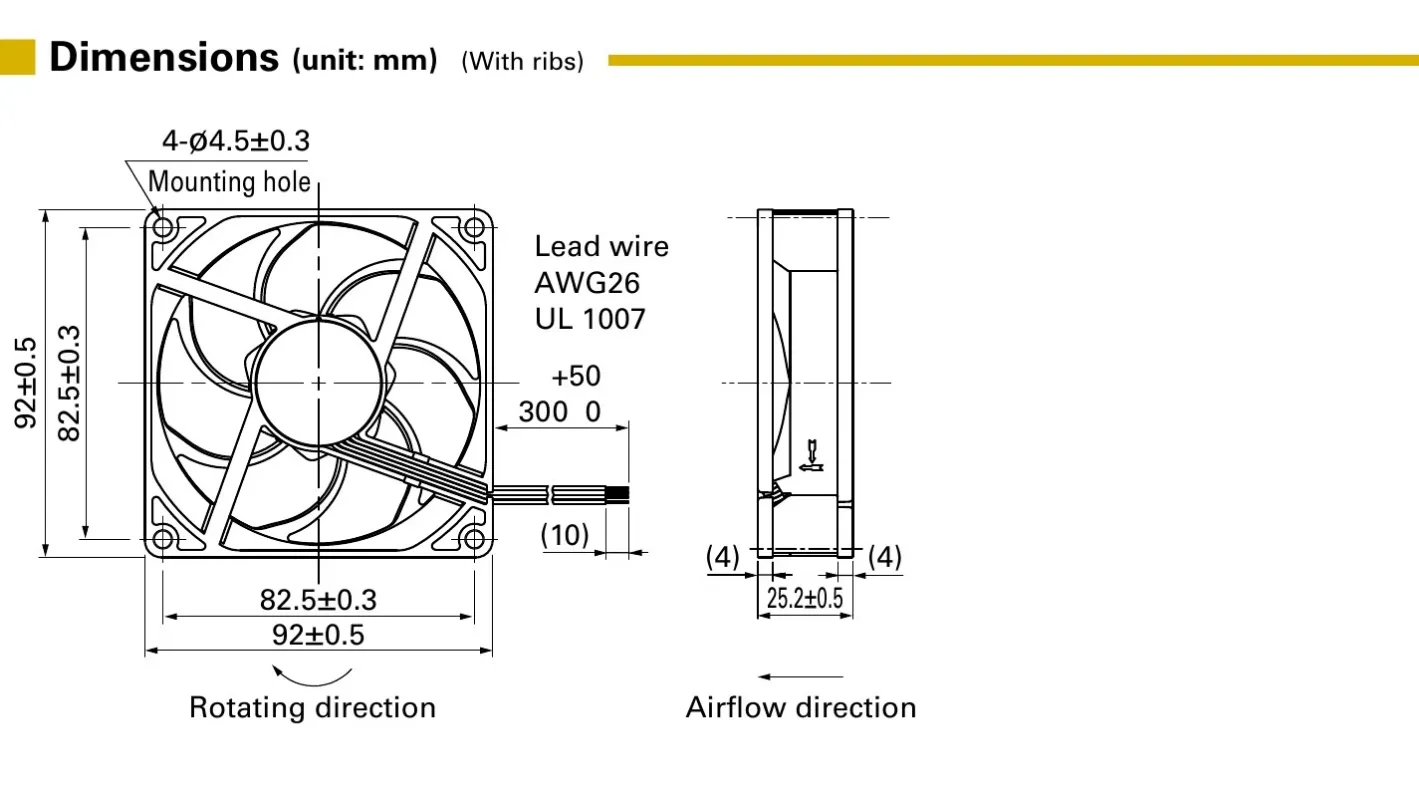
Confirm the frame dimensions, thickness and mounting hole positions match the original fan, including the ribbed or ribless frame style. This is the starting point — but only the starting point.
2. Rated voltage
The rated voltage must match the equipment's supply: 5 V, 12 V, 24 V or 48 V DC, or an AC voltage for AC fans. Also check the operating voltage range — a replacement with a narrower range may stall or behave unpredictably when the supply fluctuates.
3. Operating current
Check that the rated current suits the equipment's power supply capacity and connector rating. A higher-current fan can overload a marginal supply or a fan header designed for a smaller load, and it also changes the input power and heat inside the enclosure.
4. Airflow
Compare the maximum airflow (CFM or m3/min) with the original fan. Less airflow than the design assumes means less cooling margin — components run hotter and age faster, even if the fan itself works perfectly.
5. Static pressure
Airflow figures are measured in free air. In real equipment, filters, grilles, heatsinks and dense cabling create resistance (system impedance). The replacement fan's static pressure must be high enough to push the required air through that resistance — compare the airflow–static pressure curve, not just the headline CFM number.
6. Noise
If the equipment has a noise specification — medical devices, office equipment, home appliances — check the sound pressure level in dB (A). A same-size fan running at higher speed can be several decibels louder, which is clearly noticeable.
7. Expected life and bearing type
Ball bearing and sleeve bearing fans of the same size can have very different expected lives, and life ratings also depend on temperature. Match the fan's expected life (for example, L10 at 60 C) to the equipment's service cycle, so the fan is not the first component to fail.
8. Signal and control functions
Check whether the equipment needs a tachometer (pulse/FG) output for speed monitoring, a lock sensor (RD) alarm, or PWM speed control. A two-wire replacement in a system wired for a four-wire PWM fan will run at full speed only — or trigger fan-failure alarms.
9. Environmental protection
For outdoor, humid, dusty or oily environments, confirm whether the fan needs splash proofing or dust protection (such as an IP68 rating), a wide operating temperature range, or other environmental resistance that the original fan provided.
10. Supply consistency
For production equipment, one working sample is not enough. Confirm the supply cycle and batch-to-batch consistency of the replacement model, so the fan validated today is the same fan that arrives for mass production next year.
What a true drop-in replacement means
A genuine replacement for an imported fan is not simply a product with the same dimensions. It is a comprehensive match across performance, structure, function and supply: same mounting, equal or better airflow and pressure, compatible electrical and signal interfaces, a life rating that fits the equipment, and stable availability in production quantities.
That is how we match replacement fans at Xuanrui. Send us the original model number — or a photo of the fan label — and we will check the candidate against the original fan's datasheet on all ten points above, across our NMB, AVC and SANYO fan ranges. Browse the models in our product list, or contact us for a replacement check.