How a DC Cooling Fan Removes Waste Heat from Equipment
How does a DC cooling fan actually cool your equipment? Heat load, internal airflow path and fan performance work as one system - and why maximum airflow alone never tells the whole story.
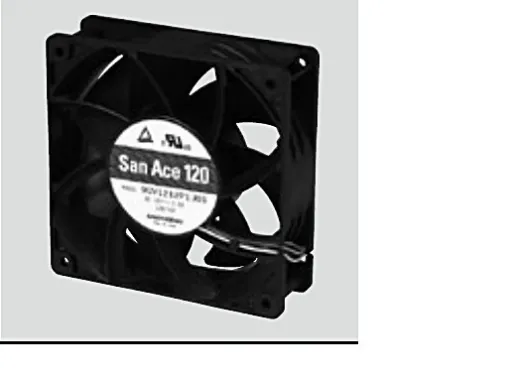
Every electronic device generates waste heat while it works — continuously, for as long as it runs. Power supplies, processors, power modules and drives all convert part of their energy into heat, and that heat has to leave the enclosure — otherwise temperatures keep rising until performance drops or components fail. In most equipment, the component that moves the heat out is a DC cooling fan.
How the fan carries heat away
A DC cooling fan uses a motor to spin an impeller, which pushes air in one direction and creates a continuous airflow through the equipment. The cooling process follows a simple path:
- Cool air is drawn into the equipment from outside.
- The air passes over heat-generating components, heatsinks and other areas that need cooling.
- As it flows, the air absorbs heat from those surfaces.
- The warmed air is pushed out of the equipment through the exhaust path, carrying the heat with it.
The fan does not "destroy" heat — it transports it, by keeping fresh cool air moving across hot surfaces and sending the heated air outside.
Cooling is a system, not a single component
From an engineering point of view, the final cooling result can be understood as three factors working together:
The equipment's heat load + the internal airflow path + the fan's performance = the actual cooling effect
If any one of the three is wrong, cooling suffers. A powerful fan cannot compensate for a blocked or badly routed airflow path, and a well-designed enclosure still overheats if the fan is too weak for the heat the equipment produces.
Why a fan's parameters cannot be judged on their own
This is why a cooling fan should never be evaluated by its datasheet numbers alone. The most common example is maximum airflow. A fan's rated airflow is measured in free air, with nothing in front of or behind it. Installed in real equipment, the same fan has to push air through heatsink fins, dust filters, grilles, ducts and crowded internal structures — all of which create air resistance, called system impedance.
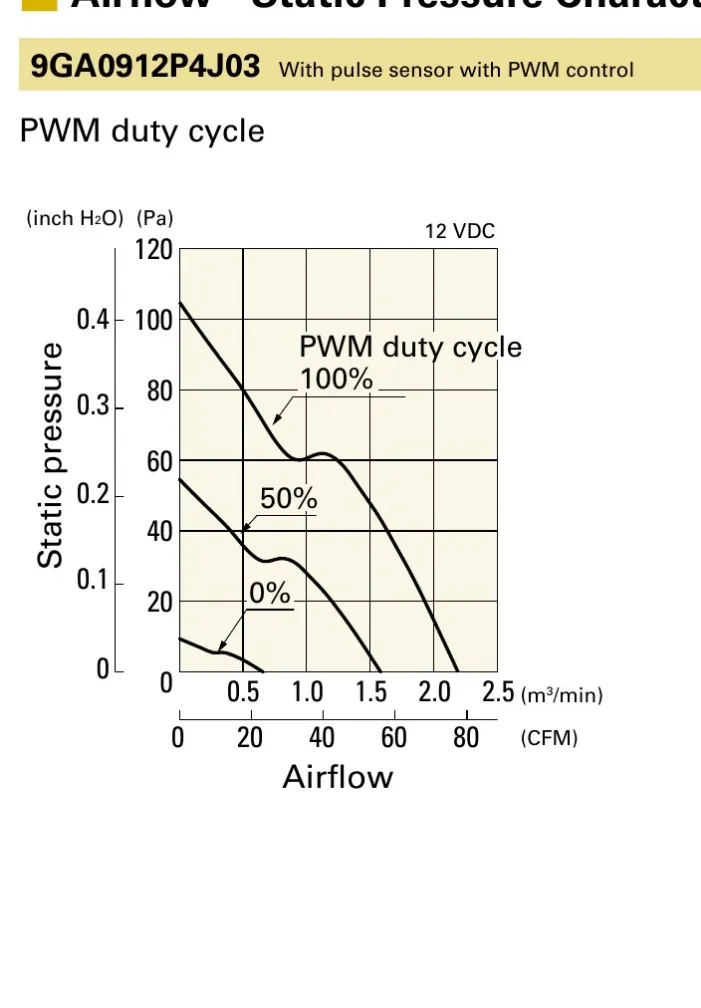
Against that resistance, the fan's delivered airflow drops. How much it drops depends on the fan's airflow–static pressure (P-Q) curve: the point where the curve meets the equipment's resistance is the fan's real operating point, and the airflow at that point — not the free-air maximum — is what actually cools the equipment.
So a fan that looks stronger on paper can cool worse in a high-resistance enclosure than a fan with a lower maximum airflow but higher static pressure. This is also why fan selection can never be based on "maximum airflow" alone — and why, when replacing a fan, matching the size is only the first of many checks, as our cooling fan replacement checklist explains.
Matching the fan to the equipment
Good cooling design starts from the equipment: how much heat it produces, how air can move through it, and how much resistance that path creates — then chooses a fan whose performance curve fits. If you are selecting or replacing a DC fan for your equipment, send us the model number or a photo of the existing fan label. We will check airflow, static pressure and the other key parameters against the original fan's datasheet across our NMB, AVC and SANYO ranges, or contact us to discuss your application.