AVC Cooling Fans: Axial Series (DA, DB, DC, DF, DV) and Radial Fans Explained
How AVC cooling fans are classified: the DA, DB, DC, DF and DV axial series plus radial fans, compared by airflow, static pressure, noise and power — and how to choose the right series.
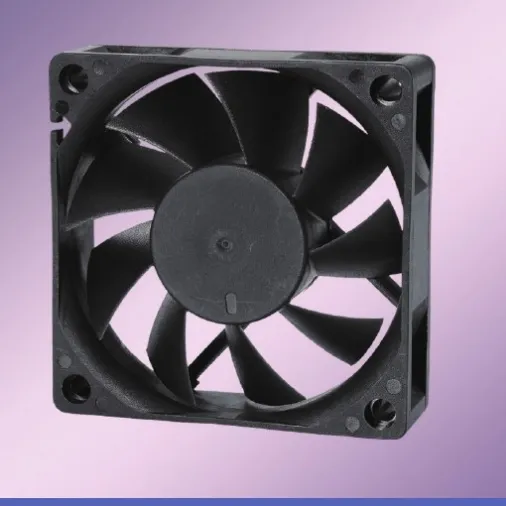
AVC (Asia Vital Components) builds DC cooling fans for servers, telecom equipment, power supplies and industrial electronics. Its range looks large from the outside, but it is organised in a logical way: two airflow families — axial and radial — and, inside the axial family, a handful of series letters that tell you how the impeller is built and what the fan is good at. Once you know the letters, a model name tells you most of what you need before you even open the datasheet.
1. Axial fans: high airflow at medium pressure
In an axial fan the air travels straight through, parallel to the motor shaft. This design moves a large volume of air against low to medium system resistance, which covers the great majority of equipment cooling: power supplies, inverters, control cabinets, servers and communication gear. All five AVC series below are axial fans — they differ in impeller design, and therefore in pressure, noise and efficiency.
2. DA series — the quiet all-rounder
The DA series is the standard single-impeller design and the starting point of the range. It is tuned for low noise at useful airflow, so it fits most general-purpose applications where the airflow path is fairly open and acoustics matter — office equipment, consumer electronics, light industrial gear.
3. DB series — more pressure from the same airflow
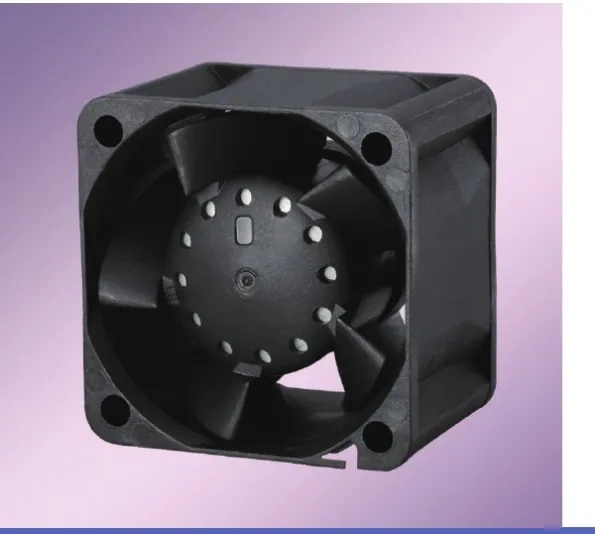
DB fans add fixed stator airfoil blades behind the rotating impeller. The stator straightens the swirling air leaving the blades and converts part of that swirl into pressure. The result is noticeably higher static pressure than a DA fan of the same size at a similar airflow — a practical upgrade when a DA fan is already at its limit in a denser enclosure.
4. DC series — built to save power
The DC series is optimised for efficiency: motor and blade designs that reach their airflow target with the lowest possible power draw. These fans suit battery-backed equipment, always-on devices and products with strict energy budgets, where a few watts per fan multiply across thousands of units.
5. DF series — two impellers in series for very high pressure
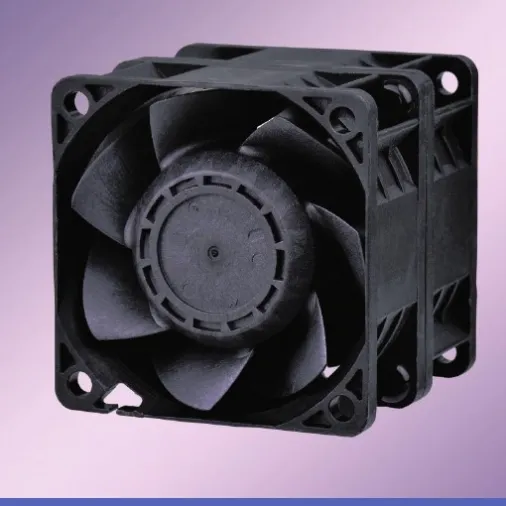
The DF series stacks multiple rotating impellers and motor drives in series inside one frame. Each stage adds pressure, so a compact fan can push air through very restrictive systems — densely finned heatsinks, stacked server boards, tightly packed telecom shelves — where a single-impeller fan would stall. This is the series to look at when static pressure, not raw airflow, is the problem.
6. DV series — overlapping impeller for high-impedance systems
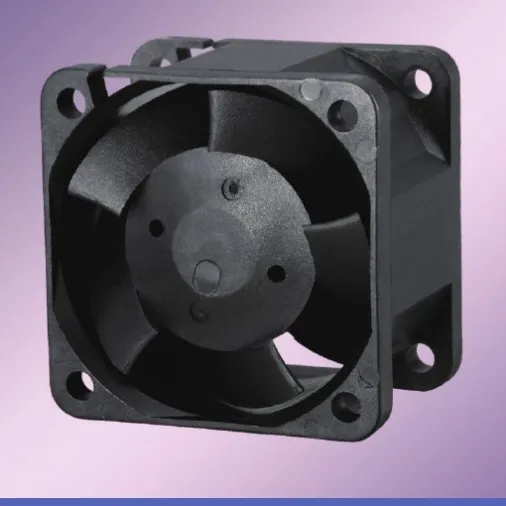
DV fans use an overlapping impeller arrangement designed for systems with large airflow resistance (high impedance): thick filters, louvres, long ducts and crowded chassis. They hold their airflow better than standard designs as resistance rises, which makes them a common choice for industrial and outdoor equipment.
7. Radial fans: when the air has to turn a corner
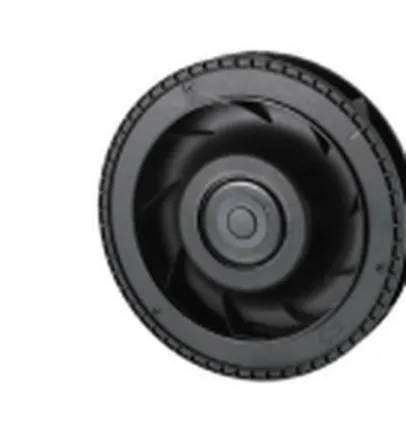
Radial (centrifugal) fans take air in along the shaft and discharge it at 90 degrees. They deliver high back pressure at lower flow volumes — the opposite trade-off to axial fans. They can run with or without a housing; a housing raises pressure further and directs the outlet flow where it is needed. Large radial fans are usually supplied without a housing, so the inlet arrangement has to be planned as part of the machine design.
8. Quick selection guide
- Low noise, general cooling → DA
- Same size, but you need more pressure → DB
- Lowest power consumption → DC
- Very high static pressure in a small frame → DF
- Dense filters, ducts and high system resistance → DV
- High pressure at low flow, or the air must turn 90° → Radial
We supply AVC cooling fans alongside NMB and SANYO models, including replacement fans for servers, inverters and industrial power supplies. Browse the brands on our Brand Zone page, or send us the model on your failed fan via Contact Us and we will match the series, size and voltage for you.